坐敷芸歓楽双禄
- タイトル
- 坐敷芸歓楽双禄
- タイトル(ローマ字)
- Zashiki gei tanoshimi sugoroku
- 画工
- 歌川芳豊(Utagawa Yoshitoyo, 1830-1866)
- 出版者
- 丸屋甚八(Maruya Jinbpachi, c. 1759 - 1872)
- 所蔵機関
- 東京都立図書館
- IIIF Manifest
- https://iiif-depot.honkoku.org/iiif/manifests/2f8bdae1-dcf0-41fb-8e57-900e8dd9118b/manifest.json
校訂文
第 1 コマ
「お嬢さん、ご覧あそばせ。それ、壁エ写りましたよ。これが即ち、鳥刺し1でございます。これから、指の先で三番叟2を拵へて、写してお目にかけませう。」〈♪〉チリヤトツチンチンとつちんちりツテちんつてちん3
〈♪〉可愛ひけりやこそ神田から通ふ。憎くて、神田から通はりよか。サアお万が飴4一つ丁が四文。5
「どうだ〳〵。この芸ばかりは、古人翫雀6丸出しだから、どつと誉めてくれ。奇妙か〳〵。」
【鳥刺し】細い竹竿などの先端に鳥黐を塗りつけ、小鳥を捕えること。また、その人。特に、小鳥を捕えてそれを売るのを業とした人。(『日本国語大辞典』より)
鳥刺しの姿は『新板鳥さし』でご確認いただける。『新板鳥さし』に関する説明は「日本かるた文化館」のHPでご確認いただける。
↩【三番叟】「能から歌舞伎、人形浄瑠璃に移入し、序幕の前に祝儀として舞うもの。」さらに、「(1)を模した人形あやつりの玩具。糸で上方から動かす南京操の人形をまねて、多くの糸をつけて、板からつるしたもの。」(『日本国語大辞典』より)
三番叟の姿は#bでご確認いただける。三番叟が被っている烏帽子は三角形であり、鳥刺しの帽子に似ている。影絵として写す鳥刺しの姿が三番叟の姿に変貌していく過程を想像しなければならないのは、このコマの魅力でもある。
↩三味線の音を表現する文章である。
↩【お万が飴】江戸時代、文化末ごろから天保にかけて流行した飴売りの一つ。また、その飴。女装をして女の声色を使って行商した。
*滑稽本・箱根草〔1844~46〕初・中「お前がお万が飴がこがしにむせた時のやうな声でうなられるのだから、友達の身じゃアこてへられねへ訳サ」
*狂歌・近世商賈尽狂歌合〔1852〕「おまんが飴。かわいけりゃこそ神田からかよふ、にくて神田からかよわりょか、おまむがあめじゃに一つてふが四もんじゃ」
*随筆・真佐喜のかつら〔19C後〕九「文化の末より町々飴売ありく男あり。〈略〉青紙にて張たる笊をおふごにてかたげ、声おかしく、おまんが飴じゃに、一丁が四文、と呼歩行」 (『日本国語大辞典』より)
お万が飴を売っている商売人の姿は以下のように記録されている。
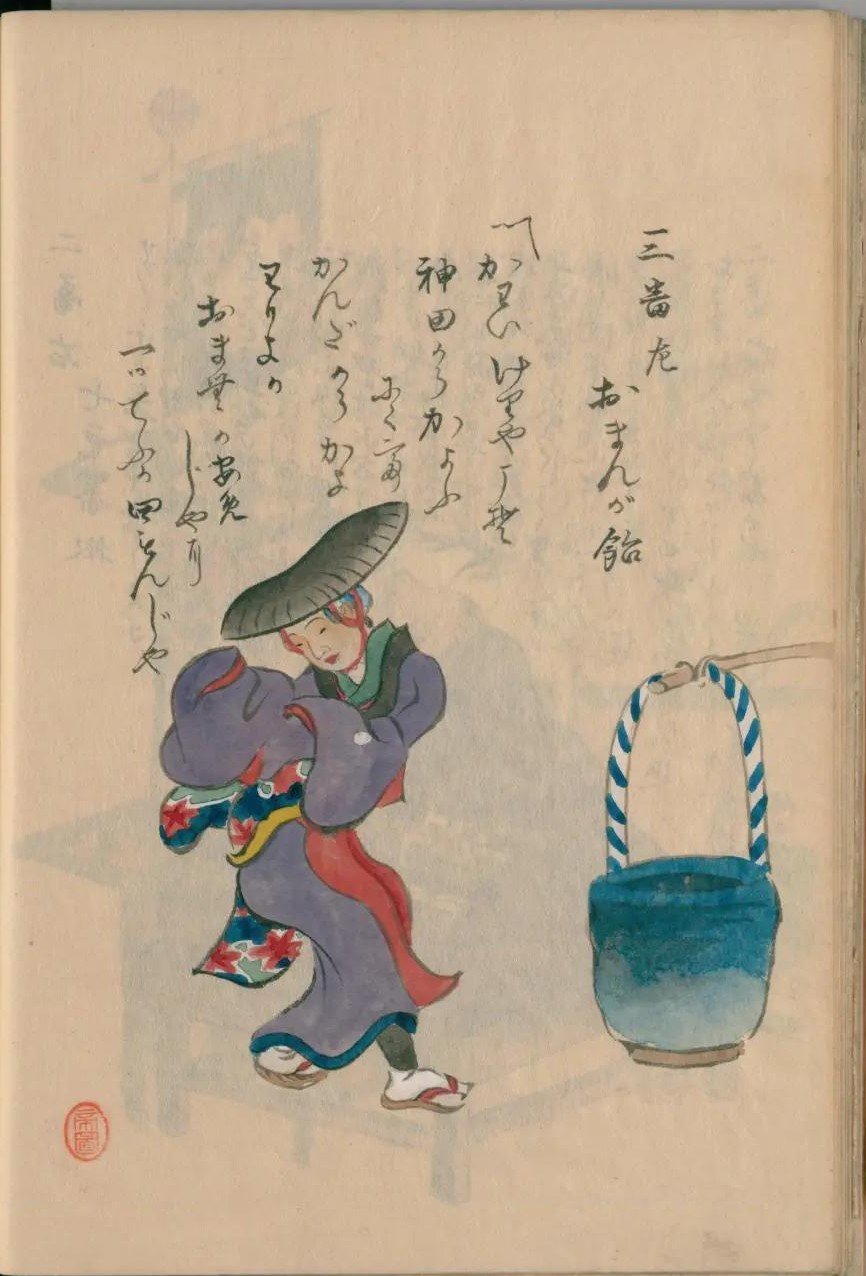
旬癡叟黙老稿・文亭梅彦判、『近世商賈尽狂歌合』、嘉永五。写本。国立国会図書館所蔵本、請求番号 丑-44。
↩「可愛ひけりやこそ神田から通ふ憎くて、神田から通はりよか。」という節は、常磐津節「飴売り」からの引用である。
常磐津松希太夫の演奏で聞いていただける。
常磐津松希太夫のチャンネルでは常磐津節「飴売り」の演奏を見ていただける。
↩【翫雀】四代目中村歌右衛門であり、天保10年に上演された浄瑠璃『花翫暦色所八景』ではお万が飴の身振りを披露し、この所作が大受けし、翫雀が飴売りに扮して大評判となった。歌川国芳が描いた浮世絵でその姿が確認できる。
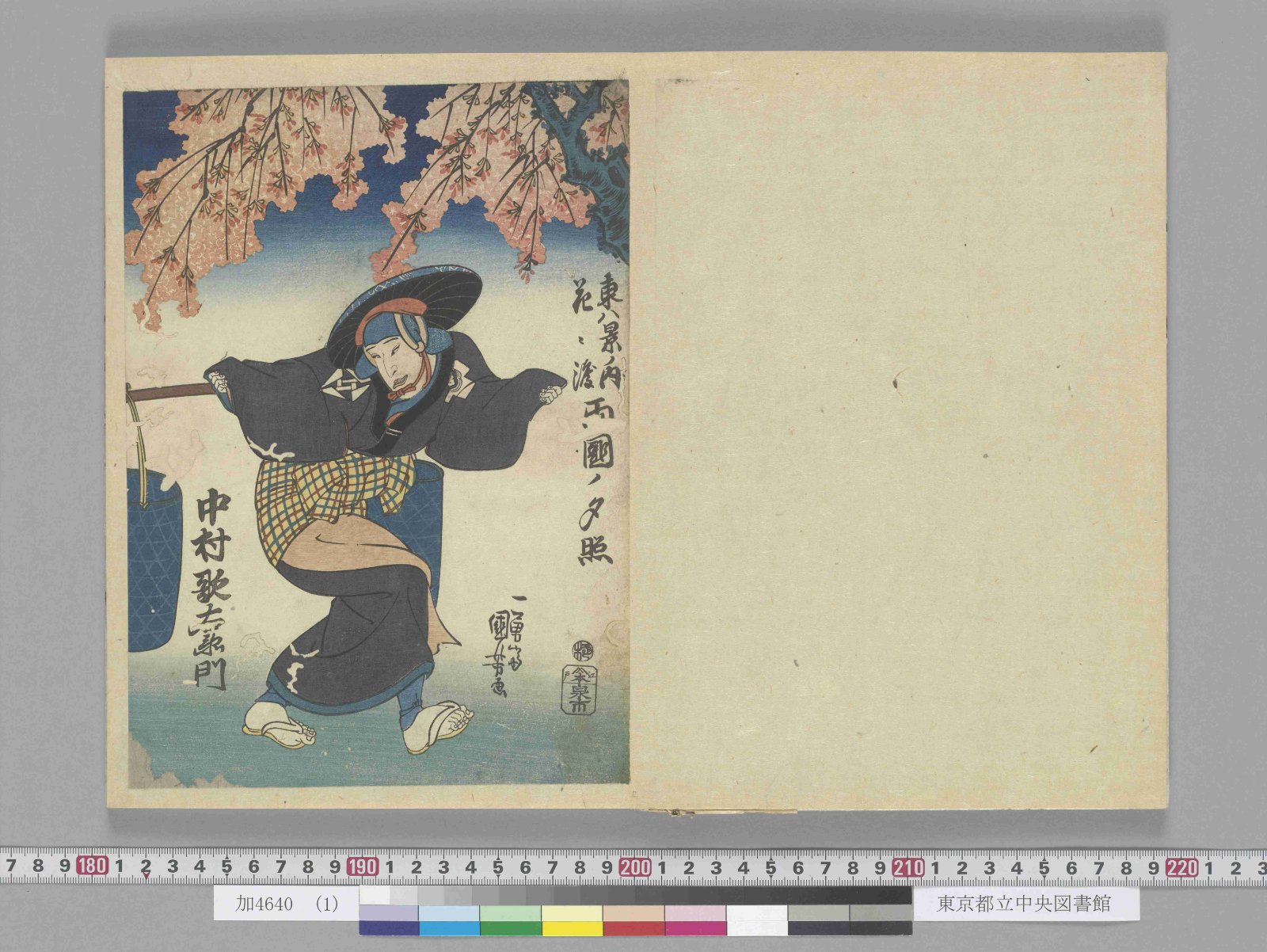
詳細は東京都立図書館のアーカイブのHPで確認できる。
早稲田大学文化資源データベースで天保10年の『花翫暦色所八景』の芝居番付が確認できる。
↩
翻訳
第 1 コマ
Hey, miss! Have a look at this! When I project it on the wall, it becomes a bird hunter, who goes out to hund birds with a long pole. 7 I will then use my fingers to tranform it into the figure of the dancer known as Sanbasō 8. Let me show you with some shamisen music. ♪
♪ "It's because I am cute that I come all the way from Kanda. Would I come all the was from Kanda if I were detestable?♪ 9 Well then, here is Oman's candy10: one for just 4 copper coins!" As I am doing this just like Kanjaku from old times I expect a big round of applause! Is this not wondrous? Is this not wondrous?
The woman is performing a show of kage-e (shadow images). She starts by projecting the image of a bird catcher (torisashi 鳥刺し), who would normally hunt birds with a limed pole. She then explains that, by using the point of her finger(s), she can turn the image into that of a Sanbasō 三番叟 dancer.
The idea of tranforming one shape into another, in a peformance of shadow pictures and moving images, is recorded in Tagaya Kanchūsen 多賀谷環中仙, Chinjutsu sange-bukuro 珍術懺悔袋 (Kyoto: Medokiya Denpee めとぎや傅兵衛, et al., 1733; National Diet Library, shelf mark: 京-59. Vol. 1, 6v–7r)
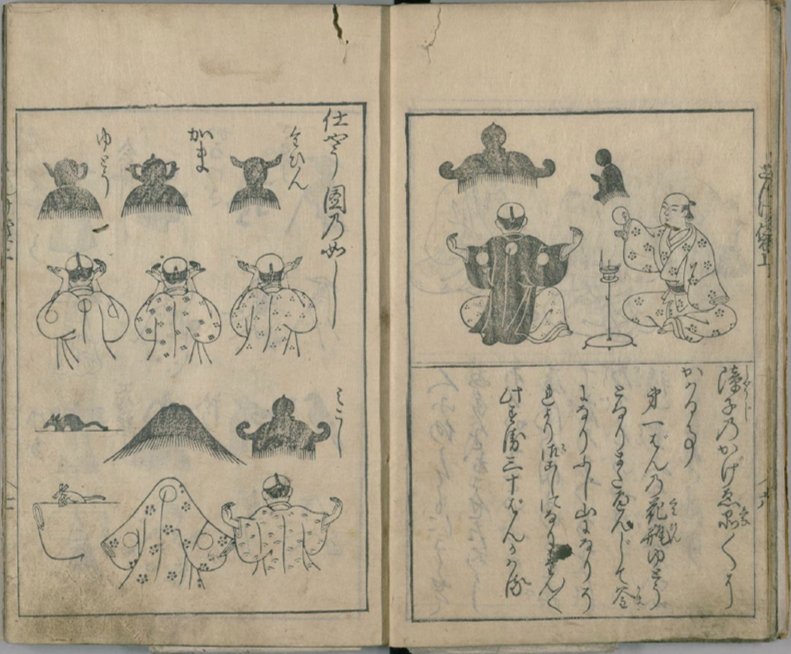 .
The text explain: "You start with a vase, then morphs into a jug for hot water, then into a rice cooker, then Mount Fuji, then a mikoshi palanquin, up to 30 different shapes."
↩Sanbasō 三番叟 is an auspicious dance originated in the Noh theatre and associated with the Noh play Okina 翁. The dance was appropriated in contexts other than the Noh theatre, including kabuki theatre, puppet theatre, and festivals. To note is the triangular-shaped headgear of the Sanbasō dancer.
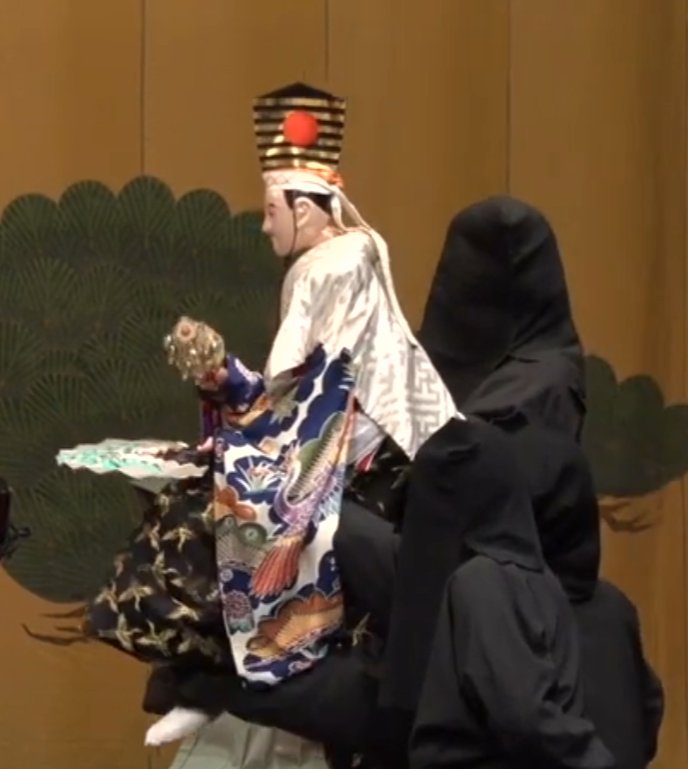
Image taken from the video of the Seiwa Bunraku performance Kotobuki-shiki Sanbasō寿式三番叟)
↩The lyrics translated here are part of a longer piece of Tokiwazu-bushi 常磐津節 (a type of narrative music). Enjoy a recording of this passage in note #5.
↩Oman candies became popular in the first half of the 19th century. In note #4 you can see an image of the seller of Oman candies from 1852 (from the album Kinsei akinai zukushi kyōka awase 近世商賈尽狂歌合). You can notice the presence of a bucket. It contained the raw material, liquified, used to produce candies.
You can enjoy how early modern candies would have been made in this 1966 video made available by the TBS Sparkle Movie Library.
↩
翻刻
第 1 コマ
〽おじやうさんごらんあそばせそれ
かべヱうつりましたよこれが
すなはちとりさしでござい升
これから
ゆびの
さきで
さんば
そうを
こしらへて
うつしておめ
にかけ
ませう
チリヤ
トツ
チン
チンとつちんちりツテちんつてちん
し
り
ふ
り
三
上
り
五
お万
が
あ
め
二
陰
絵
の
鳥
さ
し
「かあひ
けりやこそ
かんだから
かよふにくて
かんだからかよ
はりよか
サア
おまん
があ
めいつ
てうが
四文
○どうだ〳〵このげいばかりは
くわんじやく
古人翫雀
まるだしだからどつとほめてくれきめうか〳〵
三
しりふり
一
上り
お
万
が
飴
あめ
まん
二
さみ
せんたゝき